About Gridvynt
Built in Denver to solve a specific grid transition problem — not to ride a venture trend.
Gridvynt was founded in 2021 by a resource adequacy analyst and an atmospheric scientist who kept watching the same forecast failure cause the same curtailment event on different grids. The solution was better site-calibrated forecasting — so they built it.
Mission
The grid transition needs forecasting infrastructure that moves faster than the technology it’s forecasting.
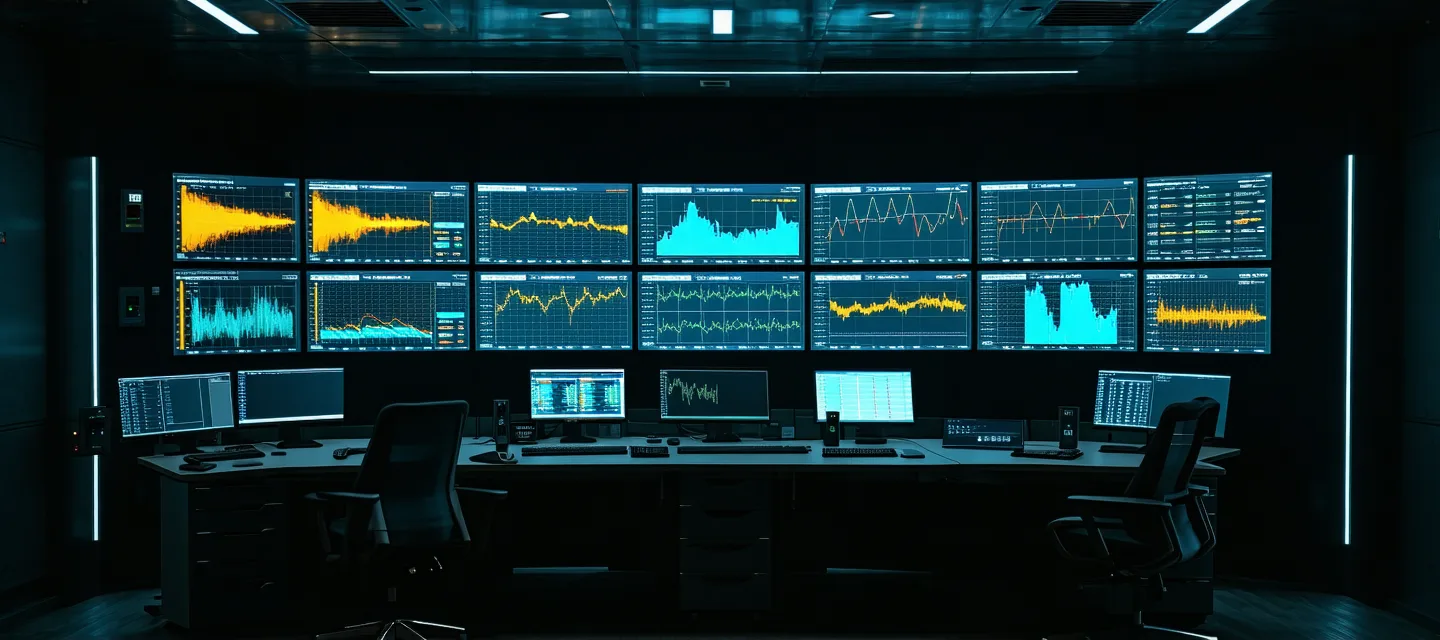
Solar and wind capacity is being added to US grids faster than the operational forecasting infrastructure needed to integrate it safely. Balancing areas across the Mountain West and beyond are managing 30%+ variable renewable energy (VRE) penetration with forecasting tools designed for synoptic-scale meteorology, not the 15-minute asset-level precision that reserve commitment decisions require under high-VRE conditions.
Gridvynt exists to close that gap. Not by building a general-purpose weather product and pointing it at solar panels, but by building a production forecasting system designed specifically for the grid dispatch chain — with the physics, the data pipeline, and the output format that resource adequacy planners and dispatch engineers actually need.
Operating principles
How we work.
- Accuracy is measured, not asserted. Every deployment gets a monthly accuracy report. We hold ourselves to a skill-score improvement standard — not a claim.
- Pilots first, contracts second. 30 days on your actual asset data before you sign anything. Grid operators have seen enough vendors overpromise.
- Bootstrapped by design. We have no obligation to a funding timeline or a portfolio growth target. We take customers when we can serve them well.
- Domain knowledge over feature velocity. Every person at Gridvynt has worked in energy operations, atmospheric science, or grid data systems — not a general SaaS team that pivoted to energy.
Founding story
What Ingrid saw from the resource adequacy desk.
Before co-founding Gridvynt, CEO Ingrid Solberg spent several years as a resource adequacy analyst at a regional transmission organization in the Mountain West — setting day-ahead reserve requirements for markets managing a growing share of utility-scale solar and wind. The Mountain West context matters: it combines some of the highest solar irradiance in North America with complex terrain that produces localized cloud-shadow propagation effects and significant wind ramp exposure from the Front Range.
The problem she kept running into was specific and reproducible: single-point NWP forecasts systematically understated the probability of rapid solar ramp events. When cumulus convection developed over the regional terrain during afternoon hours, the solar forecast would show a gradual ramp down — and actual generation would fall 200 MW in 40 minutes. The forecast had assigned the event maybe 10–15% probability. The dispatch team responded rationally: commit extra thermal reserve. The solar curtailed at the margin.
She met Marcus Hale — an atmospheric scientist who had been building NWP bias-correction systems at a weather intelligence firm — at an energy forecasting conference in 2020. The conversation was about cloud-shadow velocity and convective initiation timing, not about starting a company. By 2021 they had a working prototype running on a 150 MW solar installation in Colorado. Gridvynt, Inc. was incorporated in Denver that year. The company followed from the prototype, not the other way around.
The team
Five people with deep domain roots in energy and atmospheric science.
Ingrid Solberg
CEO & Co-Founder
Former resource adequacy analyst at a Mountain West regional transmission organization. Brought the problem to the founding team; leads commercial relationships and customer operations from Denver.
Marcus Hale
CTO & Co-Founder
Atmospheric scientist and ML engineer. Built operational NWP bias-correction systems for a weather intelligence firm before co-founding Gridvynt. Leads forecast modeling architecture and ensemble methodology.
Desta Birru
Lead Forecast Scientist
PhD in atmospheric science with a focus on mesoscale NWP verification. Developed the wind turbine wake-sector correction methodology and Gridvynt’s approach to probabilistic skill-score reporting.
Work with us
We’re a small team that takes on fewer customers to serve them better.
We run a 30-day pilot before any annual commitment. If the accuracy improvement isn’t there in the data, we’ll tell you.